Quality Assurance & Testing
S R Forgings manufactures high tensile and structural fasteners at our works in Focal Point, Ludhiana. This page sets out how quality is controlled on an order: which steel goes into each grade, how it is forged and heat treated, how the result is checked, and which steps are carried out by specialist partners rather than in-house.
From bar to finished bolt
-
Steel chosen by grade and size
The same steel does not qualify every property class at every diameter, so material is selected by grade and size, not by price. The steel we use for each grade is listed in the table below.
-
Forging and forming
Heads are forged on our own presses. J bolts, L bolts and other bent bolts are formed before heat treatment, so the bend is never made in hardened steel.
-
Threading and gauging
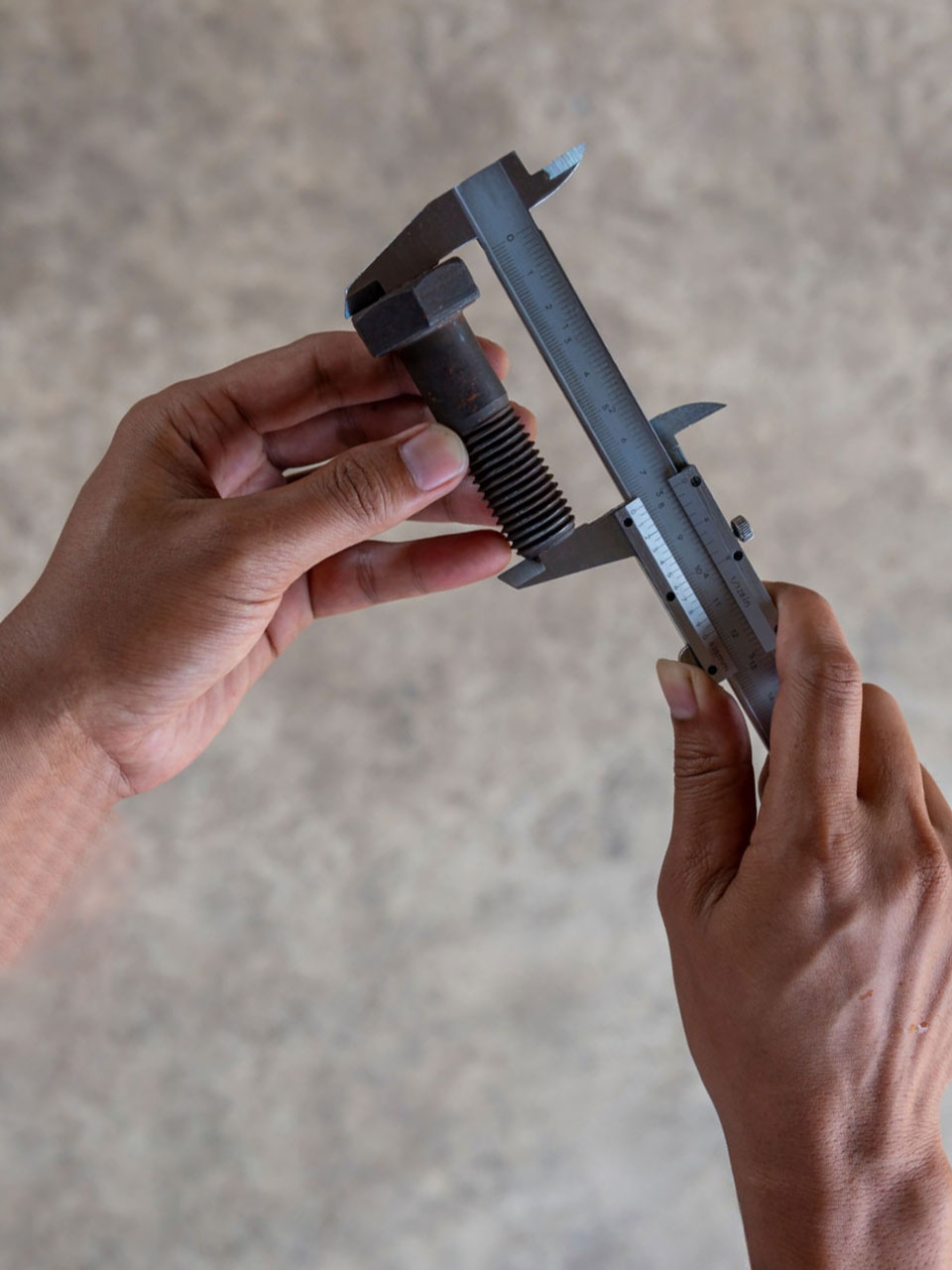
Where the thread form allows, threads are rolled on our hydraulic thread rolling machine, up to Ø100 mm. Rolling keeps the grain flow of the steel unbroken instead of cutting through it. Threads are checked with go/no-go gauges.
-
Heat treatment
Bolts are through hardened by quenching and tempering, not case hardened. This is done by a specialist heat treatment partner in a 2 m deep, gas-fired pit furnace. The bolts hang vertically through the whole cycle, which is why long bolts come out of the quench straight.
-
Independent verification
Every heat treated lot is tested twice, by two different parties. The details are set out below.
-
Coating by specialists
Plating, hot dip galvanising and zinc flake coating are done by units whose only business is coating, including the effluent treatment that comes with it. We chose not to run our own coating line because it is a separate discipline. See coatings for the finishes available.
Two tests on every lot
We do not rely on our heat treatment partner's results alone.
- Test 1The heat treatment partner tests two pieces from the lot and issues its results.
- Test 2We draw two more pieces at random from the same lot and send them to a NABL-accredited laboratory.
- CompareBoth sets of results are checked against the requirement of the grade.
So far, the laboratory results have matched the heat treater's in every lot.
Steel used for each grade
| Property class / grade | Steel |
|---|---|
| 8.8 | EN18 (40Cr), across the full size range |
| 10.9 | EN18 (40Cr) up to 27 mm; 4140 above 27 mm |
| 12.9 | 4140 |
| ASTM A193 B7 / B7M | 4140 |
Boron steel is used only at M16 and M20, and only for black or zinc flake finishes. It is never hot dip galvanised, because the zinc bath at around 450 °C lowers its temper and can drop the hardness. Why we choose these steels is explained in our article on bolt material grades.
Certification and approvals
- ZED Silver (MSME Zero Defect Zero Effect), certificate no. 21012026_452041, issued 21 January 2026 and valid for three years. Udyam registration UDYAM-PB-12-0056636.
- Approved vendor to BHEL Industrial Valves Plant.
Questions buyers ask
Who heat treats your bolts?
A specialist heat treatment partner, in a 2 m deep gas-fired pit furnace. Bolts are through hardened by quench and temper and hang vertically through the cycle, so long bolts stay straight.
How do you check that the heat treatment is right?
The heat treater tests two pieces from each lot. We then draw two more at random from the same lot and send them to a NABL-accredited laboratory. So far the two sets of results have matched in every lot.
Which steel do you use for 10.9 bolts?
EN18 (40Cr) up to 27 mm diameter, and 4140 above 27 mm.
Can boron steel bolts be hot dip galvanised?
We do not galvanise boron steel bolts. The zinc bath runs at around 450 °C, which lowers boron steel's temper and can drop its hardness. We use boron steel only at M16 and M20, for black or zinc flake finishes.
Ask about your job
If you need to know the material, heat treatment or testing for a specific requirement, ask us directly.
Ask on WhatsApp Contact us